FUT and FUE Hair Transplant in Korea
Incisional Hair Transplant
A method in which the skin of the occipital region is removed in a thin strip,
and the hair attached to the strip of skin is removed under a microscope and transplanted follicle by follicle.
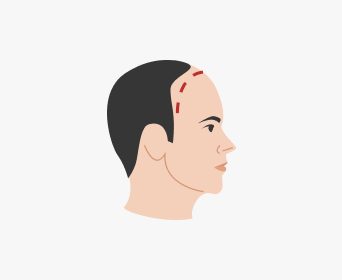
STEP 1
Transplant site design
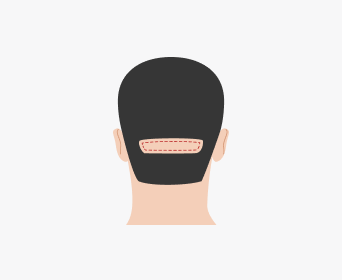
STEP 2
Design and disinfect the collection site
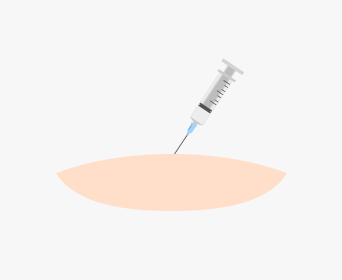
STEP 3
Collection site anesthesia
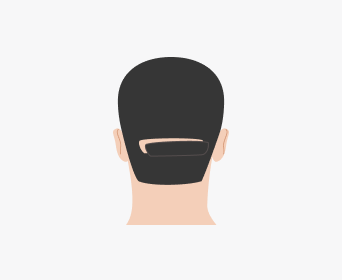
STEP 4
Follicle collection and scarless suturing
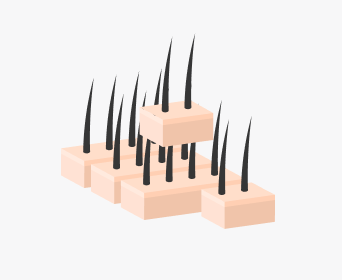
STEP 5
Aqua cutting and microscopic follicle separation
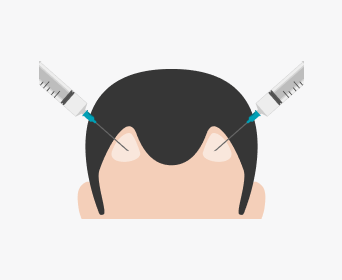
STEP 6
Partial anesthesia at the transplant site
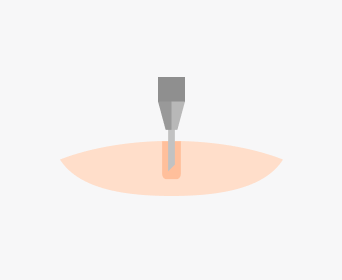
STEP 7
Creating transplant pores with slits
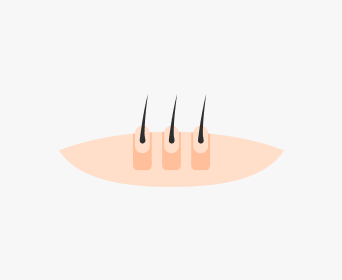
STEP 8
Follicle transplant
Suturing to minimize incisional hair transplant scarring
When suturing the gap left by the hair collection, we wear a high-magnification loupe to find the hair follicle and the gaps between the hair follicles to avoid injuring the follicles.
Over time after surgery, the scars will fade from deep and thick to a pale scar about the size of a fine pencil line.
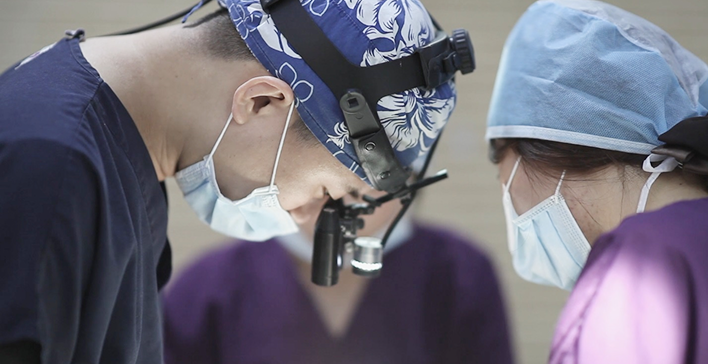
Wearing a high-magnification loupe
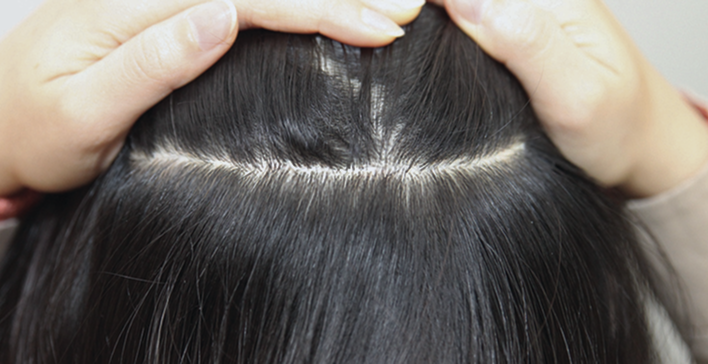
Incisional hair transplant scars
If there's even a 1% chanceof doing something better,
we pursue it, no matter how much effort and cost is required.
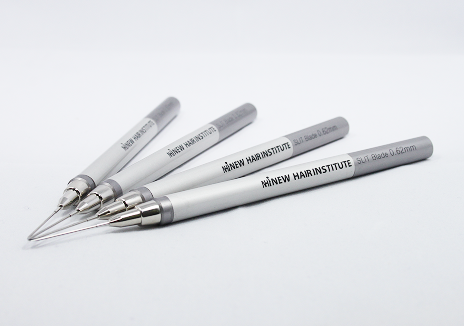
Slit
Engraftment is higher when the maximum number of hair follicles are transplanted into the minimum number of pores.
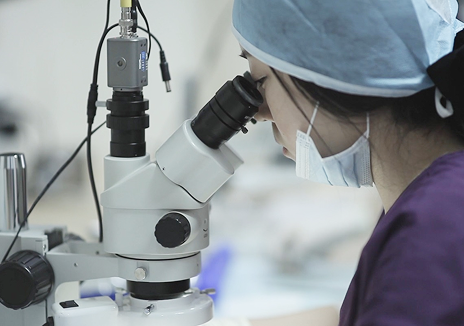
Use a high-magnification microscope throughout the process
Using a high-magnification microscope can increase the number of healthy follicles by 25% over visual isolation.
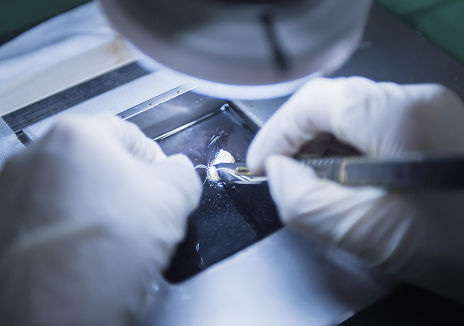
Underwater isolation aqua cutting
Hair follicles are damaged after only 60 seconds of exposure to air. Underwater isolation minimizes damage to the hair follicle compared to airborne isolation.
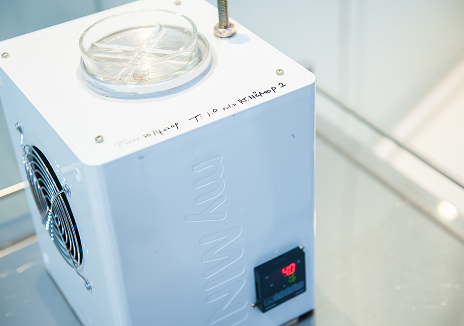
Cold moisture retention device
Keep collected follicles at 4 degrees until just before transplant to minimize heat damage to the follicles

Organ preservation solution
The same organ preservation solution used in liver and heart transplant surgeries is used to keep hair follicles healthy until transplant

Hyperbaric oxygen therapy for effective care after transplant
Maintain healthy hair follicles for 12 months with 3 days of effective post-transplant care
FUE Hair transplant
Using a small cylindrical micro drill that can fit 1~2 hairs
A method of harvesting and transplanting hair from the root of each hair follicle.

STEP 1
Transplant site design

STEP 2
Shaving/partial cutting of the harvested area
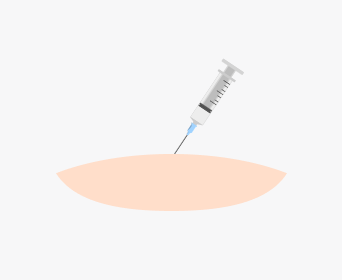
STEP 3
Giving anesthetic injection at the collection site
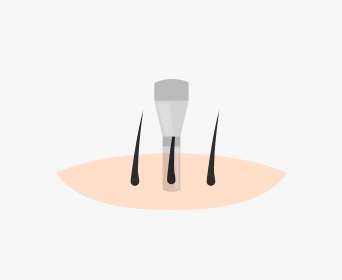
STEP 4
Non-incision hair follicle collection

STEP 5
Aqua cutting and microscopic hair follicle separation
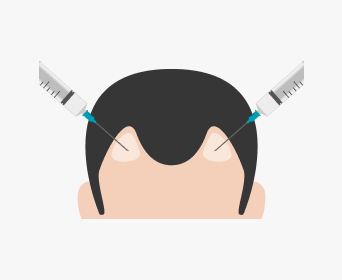
STEP 6
Giving anesthetic injection at the transplant site
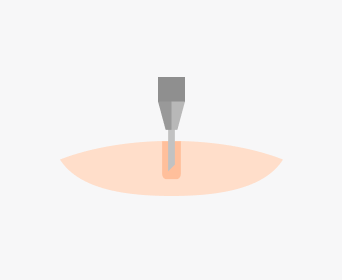
STEP 7
Creating graft pores with slits
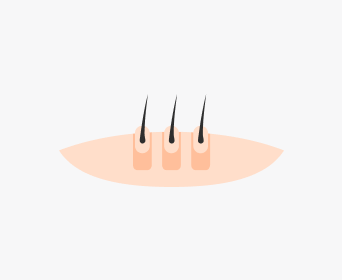
STEP 8
Hair follicle transplant

2007
Developing an enhanced
non-incisional method
Minimize non-incisional scarring using an
enhanced non-incisional punch
Smaller punches can damage collected follicular cells, and larger punches can leave more scarring than necessary. By using a punch size optimized for your scalp, it minimizes scarring and enables collecting the right amount of follicular tissue.
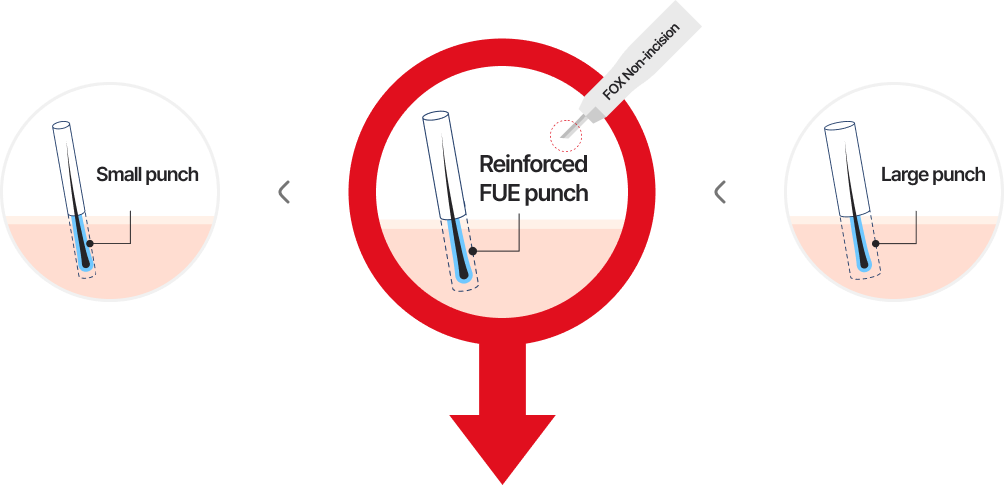

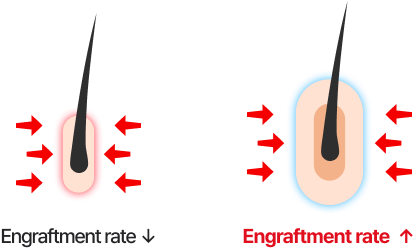
Why does the perifollicular tissue need to be thick?
The less tissue around the follicle, the more susceptible it is to external influences.
This is because there is less cushioning. Less tissue around the follicle makes it more vulnerable to external shock and increases dryness, which is one of the biggest causes of poor engraftment rates.
A non-shaving, non-incisional method that is invisible the day after surgery
Typically, a non-incisional hairline correction involves a full or partial haircut to facilitate the collection of hair follicles. A non-shaving, non-incisional hairline correction is a hair transplant that does not require a haircut before the procedure and is performed with partial or no shaving. It is the most invisible method of hairline correction because it uses the large area of the occipital region evenly, causing the least damage to the collection area. And there is no difference in density between the collection and non-collection areas
Non-incisional method
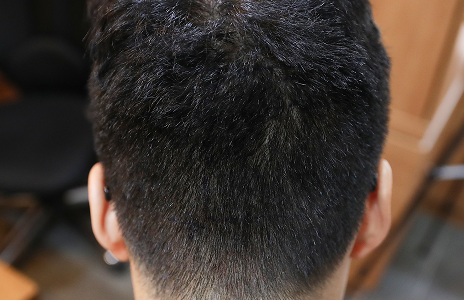
Before pre-cutting
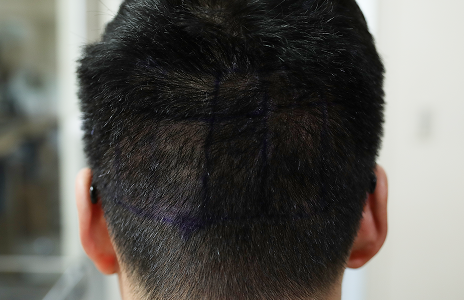
After pre-cutting
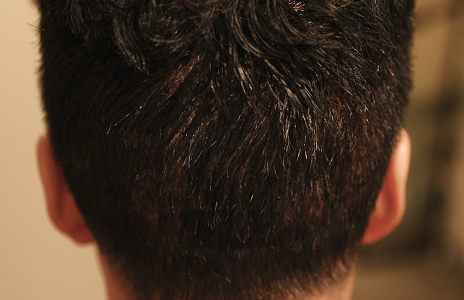
The day after surgery (after shampooing)
If there's even a 1% chanceof doing something better,
we pursue it, no matter how much effort and cost is required.
Slit
Engraftment is higher when the maximum number of hair follicles are transplanted into the minimum number of pores.
Use a high-magnification microscope throughout the process
Using a high-magnification microscope can increase the number of healthy follicles by 25% over visual isolation.
Underwater isolation aqua cutting
Hair follicles are damaged after only 60 seconds of exposure to air. Underwater isolation minimizes damage to the hair follicle compared to airborne isolation.
Cold moisture retention device
Keep collected follicles at 4 degrees until just before transplant to minimize heat damage to the follicles
Organ preservation solution
The same organ preservation solution used in liver and heart transplant surgeries is used to keep hair follicles healthy until transplant
Hyperbaric oxygen therapy for effective care after transplant
Maintain healthy hair follicles for 12 months with 3 days of effective post-transplant care